

How Printing Sheet Size Influences Packaging Production Efficiency
Printing sheet size may seem like a simple production detail, but it can have a noticeable effect on the efficiency and cost of folding carton manufacturing. The size of the sheet determines how many carton layouts can fit on each sheet, how much paperboard is left as waste, and how efficiently the printing and converting equipment can be used. Choosing the right sheet size is therefore part of production planning, not just a matter of machine compatibility. One of the most direct effects is the number of carton blanks that can be arranged on a sheet. A well-planned layout can allow more finished cartons to be produced from each sheet, while a poorly matched sheet size may leave larger unused areas. Even when the difference seems small on one sheet, it can become significant when thousands of sheets are required for a large order.
Carton dimensions naturally influence this calculation. A small folding carton may allow several layouts on a standard sheet, while a larger carton may limit the number of pieces that can be placed efficiently. The shape of the dieline also matters. Irregular flaps, locking structures, or unusual panel proportions can make it more difficult to arrange multiple blanks without creating excessive waste. The printing press itself places another limitation on sheet selection. Every printing machine has a suitable sheet-size range, and the chosen material needs to work comfortably within the equipment's operating conditions. Using a sheet that is technically possible but poorly suited to the press may reduce production efficiency or create unnecessary handling challenges.
Sheet size also affects how printing marks and margins are arranged. Registration marks, color control areas, gripper margins, and other necessary spaces require room around the printed layout. A sheet cannot be filled entirely with carton blanks simply because the physical dimensions appear to allow it. The production team needs to leave enough space for the printing process to operate correctly. Material utilization is closely connected with sheet planning. If the carton layout leaves large unused areas, more paperboard may be needed to produce the same quantity of packaging. This increases material consumption and can also increase the amount of waste generated during production. For high-volume orders, improving sheet utilization can therefore have a meaningful effect on overall production costs.
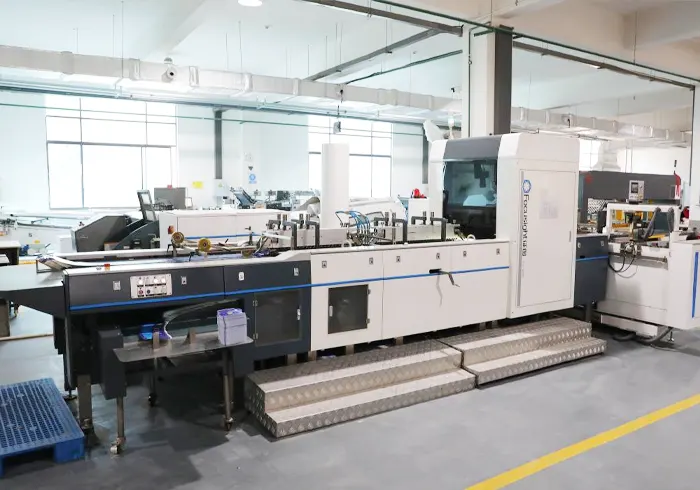
The cutting process is influenced by sheet size as well. Once the printed sheets move to die-cutting, the layout needs to remain practical for the selected die and equipment. A sheet arrangement that looks efficient from a printing perspective may not be equally efficient during die-cutting or stripping. Good production planning considers printing and converting together rather than optimizing only one stage. Sheet size can also affect setup time. If a job requires a less common sheet format, additional preparation or machine adjustments may be necessary. When several packaging jobs are scheduled together, manufacturers may consider standardizing sheet sizes where possible to reduce unnecessary changes between orders. This can be particularly useful for repeat production.
The number of cartons produced per sheet can also influence how production quantities are calculated. If a particular layout produces an uneven number of finished cartons per sheet, the manufacturer may need to run additional sheets to reach the required quantity. The extra pieces may then become overrun stock or production waste depending on the customer's requirements. Paperboard availability is another practical consideration. The most efficient theoretical sheet size may not always be the most convenient material to source. Manufacturers need to balance sheet utilization with available paperboard formats, material specifications, storage requirements, and supplier availability. A slightly different sheet size may sometimes provide a better overall solution when all production factors are considered.
Large sheets can bring advantages, but they are not automatically more efficient. Heavier or larger sheets may require additional handling and can place different demands on feeding, stacking, and converting equipment. The ideal sheet size is the one that provides a practical balance between material utilization, machine capability, handling, and production stability. For packaging buyers, sheet size may not need to be part of every packaging specification, but it is useful to understand why a manufacturer may recommend a particular format. A packaging supplier can evaluate the carton dimensions, dieline, printing equipment, material availability, and expected quantity to determine an efficient production layout before the order begins.
Ultimately, printing sheet size influences much more than how much paperboard fits through a press. It affects carton yield, material waste, machine setup, die-cutting efficiency, handling, and production planning. When the sheet format is considered together with the carton structure and complete manufacturing process, packaging manufacturers can make better use of materials and equipment while keeping production more consistent and economical.