

How Efficient Packaging Reduce Printing Material Waste
Reducing material waste has become a major priority for packaging manufacturers and brand owners alike. Rising material costs, growing sustainability expectations, and the need for greater production efficiency have encouraged companies to optimize every stage of the packaging process. One often overlooked factor is packaging layout. The way packaging components are arranged on a printing sheet can significantly influence material usage, production costs, and overall manufacturing efficiency. An efficient packaging layout helps maximize material utilization while maintaining print quality and production performance. The first step in reducing waste is optimizing sheet utilization. Every printing sheet has a fixed size, and the goal is to fit as many packaging designs as possible within that area. Poor layout planning can leave large unused spaces between cartons, resulting in unnecessary material waste. By carefully arranging dielines and minimizing empty areas, manufacturers can increase the number of packages produced from each sheet and improve overall material efficiency.
Carton orientation also plays an important role. Rotating or repositioning individual carton layouts can often create a more compact arrangement. Small adjustments in orientation may allow additional cartons to fit on the same sheet without affecting production quality. Experienced packaging engineers use specialized software to evaluate multiple layout options and identify the configuration that delivers the highest material yield. Structural design influences layout efficiency as well. Packaging that is designed with manufacturing in mind often requires less spacing between adjacent cartons. Simplified structural features and optimized dielines can reduce unused areas while maintaining sufficient clearance for die-cutting and finishing operations. This balance improves material utilization without compromising product quality or production reliability.
Another advantage of efficient layouts is reduced paperboard consumption. When more cartons are produced from each printing sheet, fewer raw materials are needed to meet production targets. This lowers purchasing costs while supporting sustainability initiatives by reducing demand for paperboard and other packaging materials. Over large production volumes, even small improvements in sheet utilization can generate substantial savings. Efficient layouts also reduce printing waste during production setup. Every print run includes a certain amount of make-ready material used to calibrate color, alignment, and registration before full production begins. Optimized layouts help manufacturers achieve stable production more quickly, minimizing the number of setup sheets required and reducing unnecessary waste.
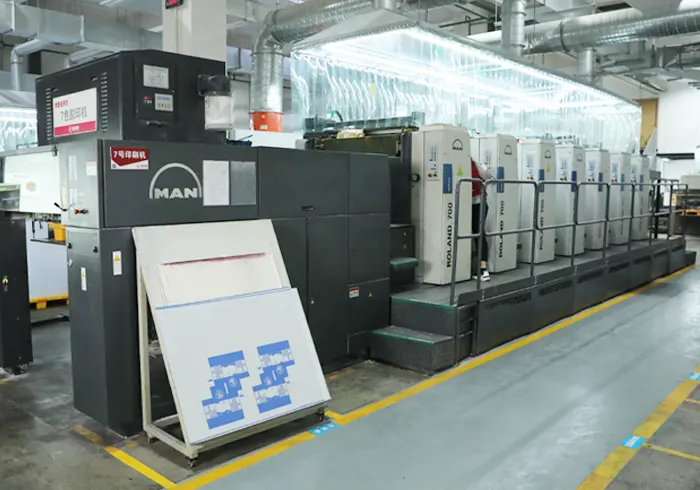
Printing consistency benefits as well. Balanced layouts distribute ink coverage more evenly across the sheet, helping maintain consistent color reproduction throughout the production run. Uneven layouts with large solid printing areas concentrated in one section may require additional adjustments, increasing both waste and production time. Well-planned layouts contribute to more stable printing performance and improved quality control. Die-cutting efficiency is another important consideration. Packaging layouts should allow cutting tools to operate smoothly while minimizing excess trim. Efficient die placement reduces scrap material generated during cutting and improves production speed. Precision engineering ensures that each carton is separated cleanly while maximizing the usable area of the printing sheet.
Inventory management can also improve through efficient packaging layouts. Better material utilization reduces the number of paperboard sheets required for production, simplifying purchasing, storage, and inventory control. Lower material consumption means fewer deliveries, reduced warehouse space requirements, and more efficient supply chain management. Modern packaging manufacturers increasingly rely on digital layout optimization software to achieve these benefits. Advanced nesting technology automatically analyzes carton dimensions, sheet sizes, grain direction, and production requirements to generate the most efficient arrangement possible. These digital tools allow manufacturers to maximize yield while maintaining compatibility with printing and finishing equipment.
Ultimately, efficient packaging layouts are a practical way to reduce printing material waste while improving manufacturing performance. By optimizing sheet utilization, minimizing trim waste, improving print consistency, and reducing raw material consumption, businesses can lower production costs and support sustainability goals. As the packaging industry continues to focus on efficiency and environmental responsibility, intelligent layout planning will remain an essential part of producing high-quality packaging with minimal waste.